
Upcoming Cars in Nigeria (2026): Trends, Models, and What to Expect
The Nigerian automotive market is entering a new phase in 2026, shaped by rising fuel costs, increasing demand for reliability, and a stronger interest in technology-driven vehicles. Buyers are no longer only focused on price — they now consider fuel efficiency, durability on rough roads, maintenance cost, and modern features. As a result, manufacturers are adjusting their upcoming models specifically for markets like Nigeria.
From compact sedans to rugged SUVs and early-stage electric vehicles, 2026 is expected to bring more variety than previous years. This shift is also supported by the growing used car ecosystem, where platforms like Abuja Car are making it easier for people to buy and sell vehicles transparently and quickly.
1. The Rise of Fuel-Efficient SUVs
SUVs continue to dominate the Nigerian market, and in 2026, this trend is becoming even stronger. However, the focus is shifting from large fuel-consuming SUVs to smarter, fuel-efficient models.
Manufacturers like Toyota, Kia, Hyundai, and Honda are expected to upgrade their SUV lines with:
- Better fuel economy engines (smaller turbocharged engines)
- Hybrid options for reduced fuel consumption
- Enhanced suspension systems for rough Nigerian roads
- Advanced safety features like lane assist and collision warning
- Improved infotainment systems with smartphone connectivity
Popular expected models and updates include:
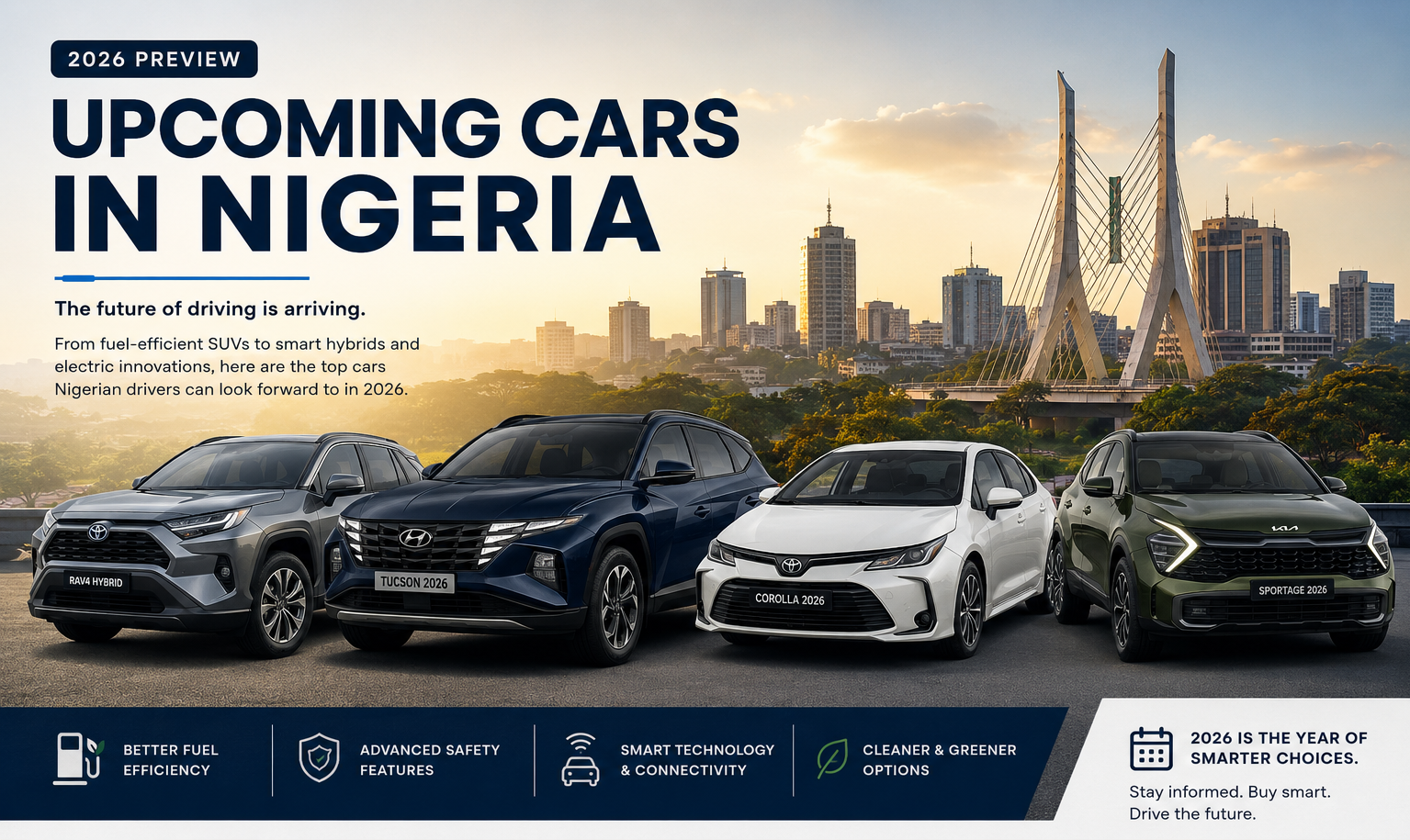
- Toyota RAV4 Hybrid (new-generation upgrades)
- Hyundai Tucson facelift
- Kia Sportage updated edition
- Honda CR-V hybrid variants
These vehicles are designed to balance comfort, durability, and long-term cost efficiency — which is exactly what Nigerian drivers are looking for.
2. Compact Sedans Remain Strong in Urban Markets
Despite the rise of SUVs, compact sedans remain extremely popular in cities like Abuja, Lagos, and Kano. Their affordability, fuel efficiency, and ease of maintenance make them ideal for daily commuting.
In 2026, expect updates and continued popularity of:
- Toyota Corolla (new tech updates and hybrid variants)
- Honda Civic (sportier design and digital dashboards)
- Hyundai Elantra (modern styling and fuel-efficient engines)
These cars are especially attractive to first-time buyers, ride-hailing drivers, and professionals looking for reliable daily transport.
3. Growing Demand for Used Imported Cars
Nigeria’s used car market remains one of the strongest in Africa. In 2026, imported used cars (commonly called “Tokunbo”) will continue to dominate due to affordability compared to brand-new vehicles.
Key trends include:
- More demand for 2018–2023 model vehicles
- Increased interest in low-mileage Japanese imports
- Preference for fuel-efficient compact SUVs and sedans
- Rising awareness of vehicle history and condition reports
Buyers are becoming more careful, focusing on mileage, accident history, and maintenance records before making a purchase.
4. Electric Vehicles (EVs) Slowly Entering the Market
While electric vehicles are still in early adoption stages in Nigeria, 2026 is expected to bring more awareness and limited availability.
Challenges still include:
- Limited charging infrastructure
- High initial purchase cost
- Power supply inconsistencies
However, some manufacturers are gradually introducing EVs and hybrids that do not fully rely on charging stations. These include:
- Toyota hybrid models
- Hyundai Ioniq series
- Kia EV6 (limited availability in premium segments)
Hybrid vehicles are currently seen as the most practical bridge between fuel-powered cars and full EV adoption.
5. What This Means for Buyers and Sellers
For buyers, 2026 offers more options than ever before — but also requires smarter decision-making. Fuel economy, maintenance costs, and resale value are now key factors.
For sellers, this is a great opportunity to:
- List vehicles with clear details and good photos
- Highlight fuel efficiency and condition
- Target growing demand for SUVs and hybrids
Platforms like Abuja Car help simplify this process by connecting buyers and sellers directly in one trusted marketplace.
Final Thoughts
The Nigerian car market in 2026 is moving toward smarter, more efficient, and more practical vehicles. SUVs will continue to lead, sedans will remain essential for cities, and hybrid technology will bridge the gap toward future electric mobility.
Whether you are buying your first car or upgrading your current one, staying informed about these upcoming trends will help you make better decisions.